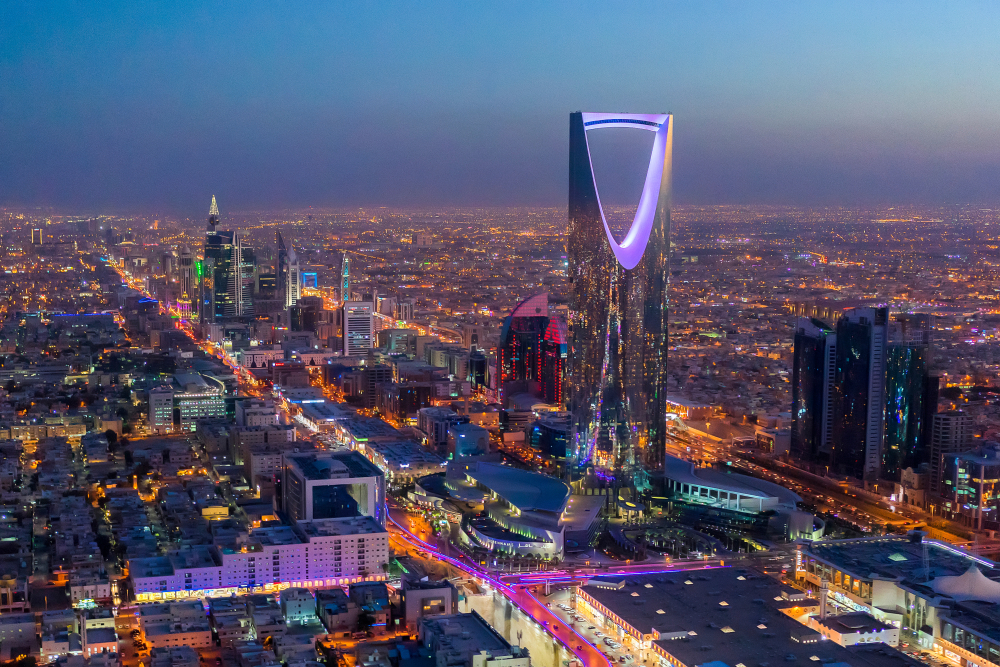
Trading Platforms in Saudi Arabia

Saudi Arabia is undergoing one of the most ambitious economic transformations in the world. Vision 2030 — the Kingdom’s sweeping diversification programme — has accelerated the development of financial markets, attracted international investment, and created a generation of younger Saudi investors eager to participate in both domestic and global markets. The Saudi Exchange, known as Tadawul, is the largest stock exchange in the Arab world by market capitalisation. Yet beyond Tadawul, a fast-growing number of Saudi residents are turning to online trading platforms to access forex, commodities, global equities, and digital assets. Choosing the right platform in this environment requires understanding the Kingdom’s regulatory landscape, its Islamic finance requirements, and the specific features that matter most for investors based in Saudi Arabia.
$1T+ Saudi GDP 2022
$2.5T Tadawul Market Cap
36M Population
95% Internet Penetration

Saudi Arabia’s Financial Markets in 2022

The Saudi Exchange (Tadawul) sits at the heart of the Kingdom’s capital markets. With a market capitalisation exceeding $2.5 trillion — driven in large part by Saudi Aramco, the world’s most valuable listed company — Tadawul attracts both domestic and international institutional investment at scale. The exchange is a member of the MSCI Emerging Markets Index and FTSE Russell’s Emerging Markets Index, giving it genuine global visibility.

Alongside Tadawul, the Nomu Parallel Market provides a lighter-regulated venue for smaller companies, offering growth-oriented investors access to early-stage Saudi businesses. For investors seeking exposure beyond domestic equities, internationally regulated online brokers offer access to global forex, indices, commodities, and increasingly, digital assets — all of which are growing in popularity among younger, tech-savvy Saudi investors.

The Capital Market Authority (CMA) of Saudi Arabia is the primary regulator for domestic securities activity. Established in 2003, it oversees Tadawul, licensed brokers, investment funds, and market conduct across the Kingdom. CMA-licensed brokers operating onshore in Saudi Arabia are subject to strict capital, conduct, and reporting requirements.

For retail investors seeking international platforms — particularly for forex, CFD, or cryptocurrency trading — the relevant licences are typically issued by foreign regulators such as the FCA (UK), CySEC (Cyprus), ASIC (Australia), or DFSA (Dubai). Verifying these licences independently remains the investor’s most important safeguard.

Four Criteria That Define a Quality Platform

Across the hundreds of brokers competing for Saudi investors’ attention, four criteria separate genuinely trustworthy platforms from the rest.

01 — Regulation

Valid Licence from a Recognised Authority

A current, verifiable licence from the CMA, FCA, CySEC, ASIC, or DFSA is the baseline requirement. Check the regulator’s public register directly — never rely on a broker’s self-reported claims. Unregulated platforms offer no meaningful investor protection.

02 — Sharia Compliance

Genuine Islamic Account Terms

Swap-free accounts that eliminate overnight interest are a standard expectation for Saudi investors. Review the full fee schedule carefully — some brokers replace interest charges with administrative fees that are economically equivalent to riba.

03 — Market Access

Tadawul, GCC Markets, and Global Reach

The best platforms for Saudi investors combine access to Tadawul and Gulf regional exchanges with international exposure — US and European equities, global forex pairs, energy commodities, and indices — from a single, unified account interface.

04 — Arabic Experience

Full Localisation and Local Support

A fully Arabic platform — including interface, educational content, customer support, and market analysis — is a significant quality indicator for brokers genuinely committed to the Saudi market, not simply passing through it.

Asset Classes Available to Saudi Investors

📊

Saudi & Gulf Equities

Direct access to Tadawul-listed stocks — including Aramco, STC, Al Rajhi Bank, and SABIC — alongside Gulf exchanges: ADX, DFM, Boursa Kuwait, and QSE. Some platforms also offer fractional share investing for high-value stocks.

📈

Forex Markets

The SAR’s peg to the USD makes dollar pairs central to Saudi forex activity. Major international pairs — EUR/USD, GBP/USD, USD/JPY — alongside commodity currencies and exotic pairs are available through most internationally regulated forex brokers.

🛢️

Oil & Commodities

Saudi Arabia’s position as the world’s largest oil exporter gives local investors a natural informational edge in energy markets. Platforms offering WTI and Brent crude CFDs, natural gas, gold, and silver are particularly well-suited to this expertise.

🌐

Global Indices & ETFs

Access to S&P 500, NASDAQ 100, FTSE 100, and European index CFDs — alongside ETFs covering international sectors and geographies — enables Saudi investors to build well-diversified portfolios without multiple separate brokerage accounts.

The Vision 2030 Effect on Retail Investment

Vision 2030 has had a direct and measurable impact on Saudi Arabia’s retail investment culture. The privatisation programme, the listing of Saudi Aramco on Tadawul in 2019, and government campaigns promoting financial literacy have together driven a significant increase in the number of individual investors participating in Saudi capital markets.

Market Context

“Vision 2030 has transformed Saudi Arabia from a nation of savers into a nation of investors. The appetite for both domestic and international markets has never been stronger — and the infrastructure to support it is rapidly catching up.”

This shift has been accompanied by a generational change in how Saudi investors access markets. Where previous generations relied on bank branches and traditional brokerage firms, younger Saudis increasingly prefer self-directed online platforms — particularly mobile-first apps that allow them to trade on their own schedule, access international markets in real time, and manage risk with built-in tools like stop-loss orders and price alerts.

For platform providers, this represents both an opportunity and a responsibility. Saudi investors — particularly newer market participants — need platforms that combine genuine regulatory protection with intuitive interfaces, quality education in Arabic, and a market offering that reflects the specific interests of the Kingdom’s investor base.

Platform Comparison at a Glance

Feature Entry-Level Platforms Professional Platforms
Minimum Deposit SAR 50 – SAR 500 SAR 1,000 – SAR 5,000+
Trading Interface Proprietary mobile app MT4 / MT5 / cTrader + mobile
Asset Range Forex, crypto, major indices Full equities, ETFs, options, commodities
Tadawul Access Usually not included Available via CMA-licensed brokers
Islamic Account Available Available
Arabic Language Partial localisation Full Arabic platform + support
Automated Trading Not available Expert Advisors / API access
Max Leverage Up to 1:100 Up to 1:500

Mobile Trading and the Saudi Investor

Saudi Arabia has one of the highest smartphone penetration rates in the world, with mobile internet usage dominating across all age groups. It is no surprise, then, that mobile trading apps have become the primary access point for retail investors in the Kingdom. The best platforms offer full-featured mobile applications that go well beyond basic order placement — providing real-time charting, economic calendars, price alert systems, and direct access to customer support, all within a single app environment.

For Saudi investors, Arabic-language mobile interfaces are a meaningful differentiator. Platforms that treat Arabic as an afterthought — offering partial translations or English-only support channels — fall short of what the market demands. The leading brokers serving Saudi Arabia have invested in genuinely localised mobile experiences, recognising that the Kingdom represents one of the most valuable retail trading audiences in the entire MENA region.

10 Rules for Safe Online Trading in Saudi Arabia

Verify regulatory status first. Check the broker’s licence number on the CMA’s official register for domestic brokers, or on the relevant foreign regulator’s website for international platforms. No valid licence means no account.

Read the Islamic account terms in full. Confirm that the swap-free account is genuinely compliant — not simply a relabelled product with alternative fees that replicate overnight interest charges.

Open a demo account before funding a live one. Use the demo environment to evaluate execution speed, platform stability, charting tools, and the quality of the customer support response.

Understand the full cost of trading. Spreads, commissions, conversion fees, inactivity charges, and withdrawal fees all affect your net returns. Ask for a complete fee schedule before opening an account.

Never invest money you cannot afford to lose. Leverage amplifies both gains and losses. Capital allocated to active trading should be genuinely discretionary — not money earmarked for essential expenses or long-term savings.

Use stop-loss orders on every position. Defining your maximum acceptable loss before entering a trade — not after — is one of the most important habits a disciplined trader can develop.

Be cautious with high leverage. A 1:500 leverage ratio can wipe out an account in minutes during volatile market conditions. Begin with low leverage and increase only as your experience and risk management skills develop.

Diversify across asset classes and geographies. Concentrating your capital in a single market or instrument — however well you think you understand it — increases the risk of significant losses from a single adverse event.

Ignore unsolicited investment offers and social media signals. Fraudulent broker schemes targeting Gulf investors are sophisticated and persistent. Independently verify any opportunity before committing capital.

Invest in education before investing in markets. Complete the broker’s full educational programme, read widely about technical and fundamental analysis, and treat the first months of trading as a learning phase rather than a profit-generation phase.

Conclusion

Saudi Arabia’s transformation under Vision 2030 has created one of the most dynamic and opportunity-rich retail investment environments in the Arab world. For investors willing to approach online trading with discipline, the combination of a growing domestic market on Tadawul, deep familiarity with global energy markets, and access to internationally regulated platforms creates a genuinely compelling set of options.

The fundamentals of sound platform selection remain constant regardless of nationality: verify regulation, confirm Islamic compliance, test before funding, understand costs in full, and invest in your own education. Investors who follow these principles consistently will be far better positioned to benefit from whatever Saudi Arabia’s remarkable financial evolution brings next.

Risk Disclaimer: Trading in financial instruments including forex, CFDs, equities, commodities, and cryptocurrencies carries a high level of risk and may not be suitable for all investors. Leveraged products can result in losses exceeding your initial deposit. This article is for informational purposes only and does not constitute investment advice. Past performance is not indicative of future results. Always seek independent financial advice before making investment decisions.
Financial Markets GoodBroker Team January 9, 2023
✍️
About the Author
GoodBroker Team

The GoodBroker editorial team specialises in financial markets, online trading platforms, and investment education across the MENA region. Our analysts research brokers, regulatory frameworks, and trading tools to help investors make informed, confident decisions in global markets.

Related Posts

Next Post

Leave a Reply

Your email address will not be published. Required fields are marked *

Recommended

Sponsored